
Heat exchanger insulation: why it is important and how to choose the right solution
Materials, correct selection and precision manufacturing of insulation for plate heat exchangers
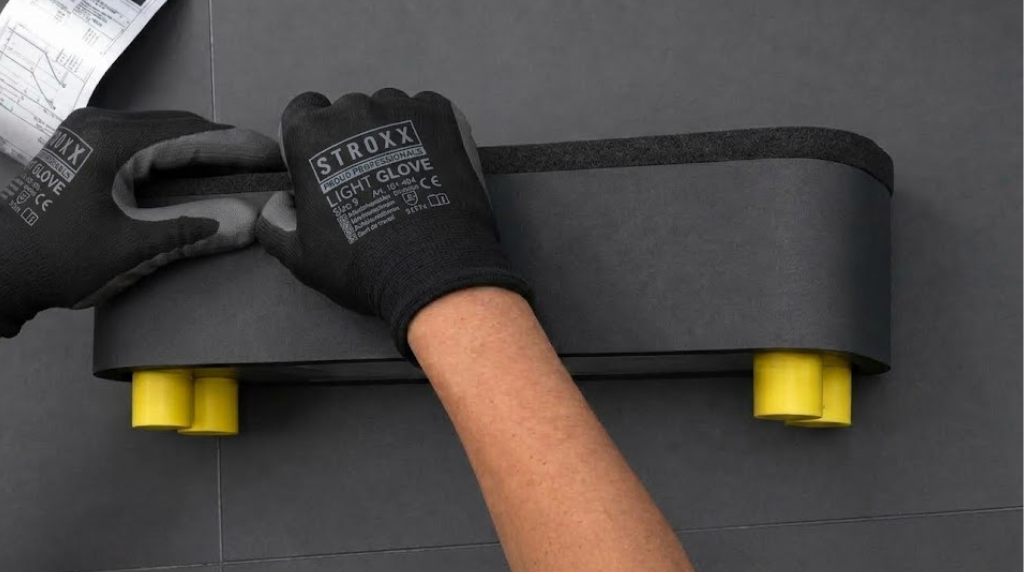
Insulating a heat exchanger can seem like a minor detail compared to designing the unit itself. In practice, though, it reduces heat loss, prevents condensation and helps deliver a safe, technically clean installation for the whole system.
Why insulate a plate heat exchanger?
A plate heat exchanger transfers heat between two separate circuits. If the heat exchanger is not insulated, part of the heat is transferred through its surface directly to the surrounding environment. In heating and domestic hot water systems, this results in heat loss that is not utilized by the system. In cooling applications, the opposite occurs: heat from the surroundings is transferred towards the cold surface of the heat exchanger, creating a risk of condensation.
The significance of heat loss is also demonstrated by a study conducted at Worcester Polytechnic Institute. In the tested uninsulated plate heat exchanger, heat losses to the surroundings accounted for approximately 24–32% of the heat transferred from the hot stream. The extent of these losses depends primarily on:
- the temperature of the heat exchanger and the surrounding environment,
- the size and design of the heat exchanger,
- airflow around the heat exchanger,
- operating time,
- the insulation material and thickness,
- the quality of the insulation installation.
This does not always represent a true heat loss. If the heat exchanger is installed in a space that is already being heated, such as a boiler room or plant room, the heat released from its surface remains within the heated area. Insulation may also be less important for equipment that operates only for short periods and with a small temperature difference. The situation is quite different in continuous operation or where large temperature differences are involved. Properly selected thermal insulation helps reduce these losses.
EPP or PUR for heating, different requirements for cooling
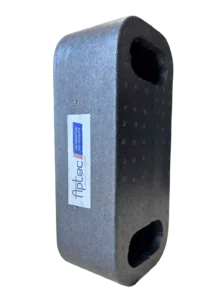
For heating and domestic hot water applications, insulation made from EPP (expanded polypropylene) or PUR (polyurethane foam). is commonly used. EPP is a lightweight and dimensionally stable material suitable for the production of rigid components that follow the shape of the heat exchanger. PUR offers very good thermal insulation properties and is also used in versions with a protective outer casing.
In cooling applications, protection against condensation is just as important as limiting heat transfer. If the surface temperature falls below the dew point of the surrounding air, moisture may begin to condense on uninsulated surfaces. Solutions such as closed-cell elastomeric foams and vapour-tight insulation systems suitable for low temperatures are used. In industrial applications with higher operating temperatures, mineral wool is also commonly used.
Insulation for specific heat exchangers
Looking for insulation for a specific heat exchanger model? Our E-shop offers insulation for more than 30 plate heat exchanger models.
How to choose insulation for a plate heat exchanger
Insulation cannot be selected correctly based solely on the heat exchanger’s capacity. Two units with the same capacity may differ in size, design and number of plates, as the resulting performance depends on temperatures, flow rates and the media used (e.g. a 30 kW heat exchanger may not have the same dimensions or design as another exchanger operating at the same capacity). If you are still selecting the heat exchanger itself and are unsure which one to choose, read our article How to choose a plate heat exchanger.
The starting point is always knowing the exact exchanger type and its dimensions. Height and width of the body, overall length and the connection layout all matter. Within a given model range, overall length can also change with the number of plates.
Beyond dimensions, you also need to factor in operating temperature and how the unit is used. A heat exchanger in a heating loop calls for different insulation than one used for cooling, where condensation also has to be accounted for. The right choice of insulation ultimately comes down to the specific exchanger model, its dimensions and the actual operating conditions.
Bonded insulation is custom-fitted to the exchanger
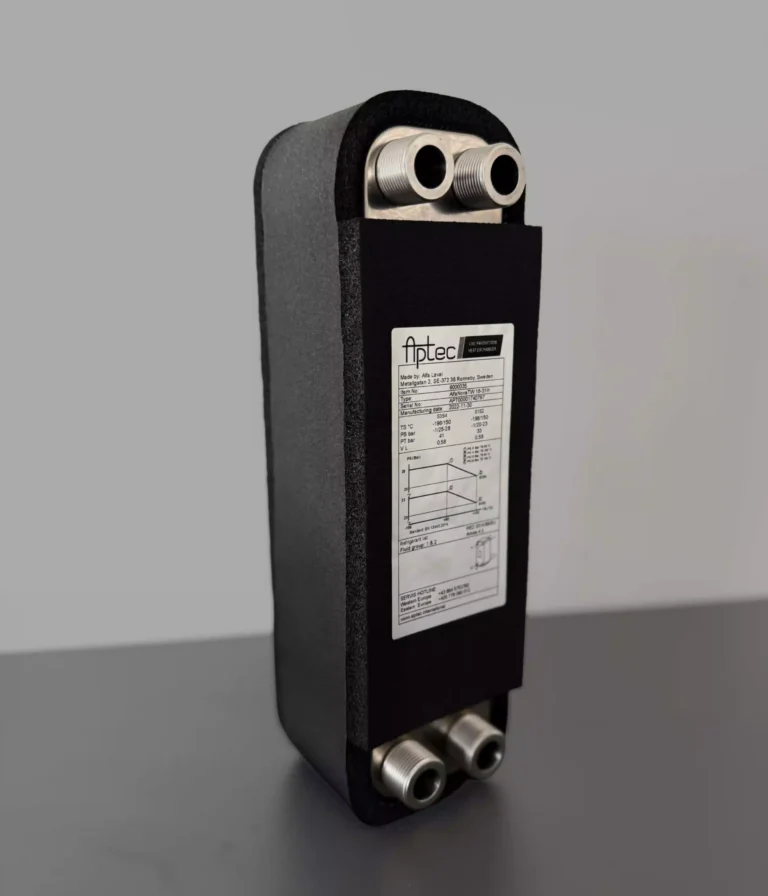
In addition to standard insulation covers, bonded insulation is also used. We incorporate it directly into the assembly design as soon as we know the heat exchanger model, the number of plates and the final dimensions. The insulation then forms part of the supplied brazed or all-stainless-steel heat exchanger, rather than being added later during installation.
For heat exchangers with non-standard connection spacing or less common models, a standard EPP or PUR insulation cover may not fit precisely or may not be available for the specific model at all. In such cases, we use bonded insulation.
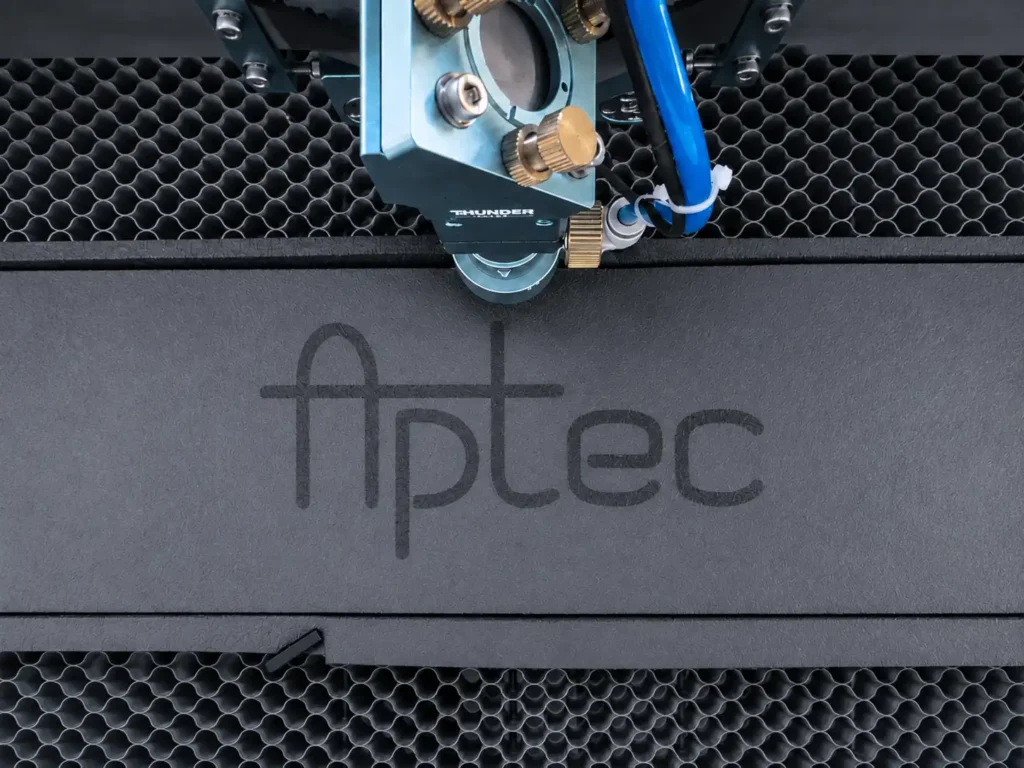
The individual parts are prepared according to the dimensions of the specific design. We cut the insulation material using a laser plotter Thunder Laser Nova 51, supplied to us by NarranThe cut pieces are then assembled and bonded directly to the heat exchanger, so that the insulation follows the shape of the walls and the connections between the individual parts.We also use the laser to engrave the logo, type designation or heat exchanger number. During service, even years later, you can identify the heat exchanger directly on site.
A single uninsulated area can affect the overall result
A heat exchanger never operates in isolation. It's connected to piping and how well it's integrated into the system also depends on the connections, mounting and other accessories for plate heat exchangers. That's why it's worth thinking not just about the exchanger and its insulation at the design stage, but also about how the whole solution will look once it's installed.
Insulation is therefore best viewed in the context of the entire installation. A good result doesn't come down to the insulation material alone, but to how well the specific exchanger, the operating conditions and quality of workmanship all work together.